
Bridging Troubled Waters
Bridging Troubled Waters, a 2024 body of work, was funded by The Puffin Foundation, Ltd.
“Bridging Troubled Waters” raises consciousness of Minnesota’s urban watersheds. Greg’s watercolor paintings uncover a forgotten creek flowing by abandoned and misplaced industrial sites, railroad tracks, manholes, storm sewers, informal dirt trails and illegal dumping. Though humans have discarded this land, nature has not. Flora and fauna make a home amidst discoloration and disarray.
Greg Lecker’s “Bridging Troubled Waters” took a creative turn on June 28, 2024 when the US Supreme Court announced its decision reversing a long-standing environmental precedent known as “Chevron Deference” (SCOTUS 1984). The decision will make it easier for courts to block environmental, climate and wildlife regulations.
Instead of being discouraged, Greg was heartened by this statement from his project’s funder: “we have not found a spirit of despair and surrender, but rather a growing ferment for change”. The project’s paintings now incorporate watercolor painting of creek area subjects layered atop a block print.
Funding has been made possible by The Puffin Foundation, Ltd.
Watercolor paintings, water-based ink block prints, 8” x 10”
1. Buoyancy
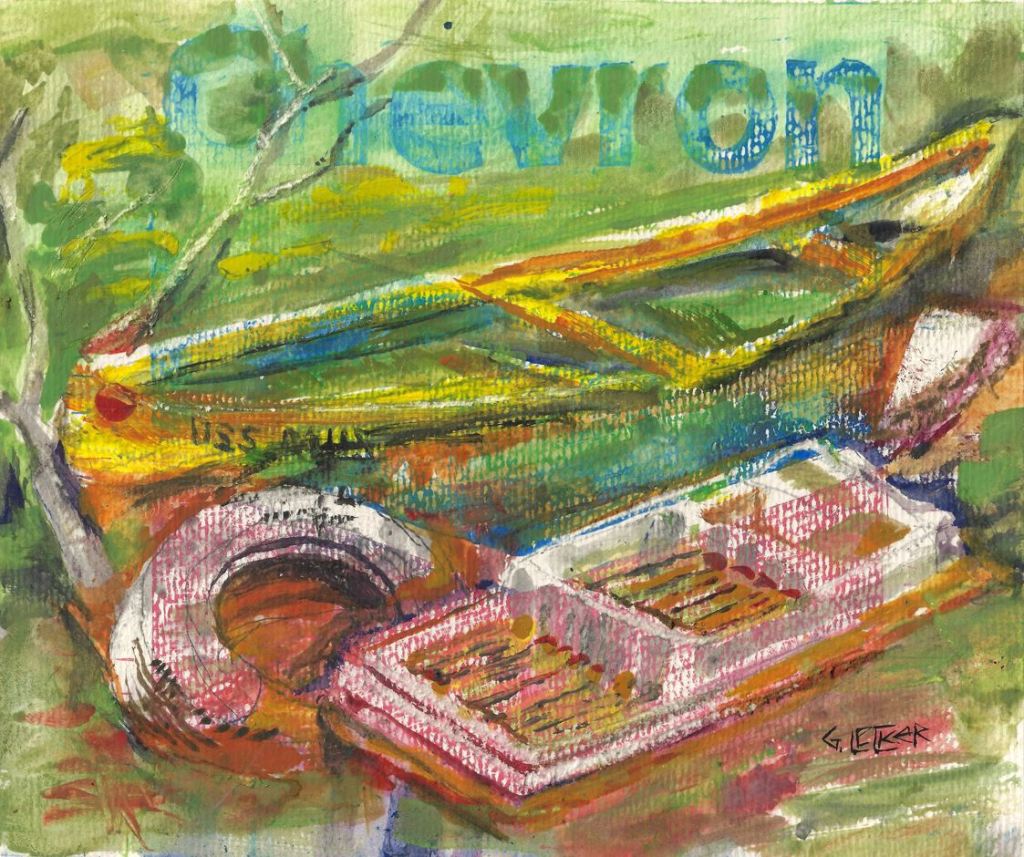
Tires, Styrofoam, coolers and the occasional refrigerator door and canoe can be found floating in the creek.
2. Mystery Seep
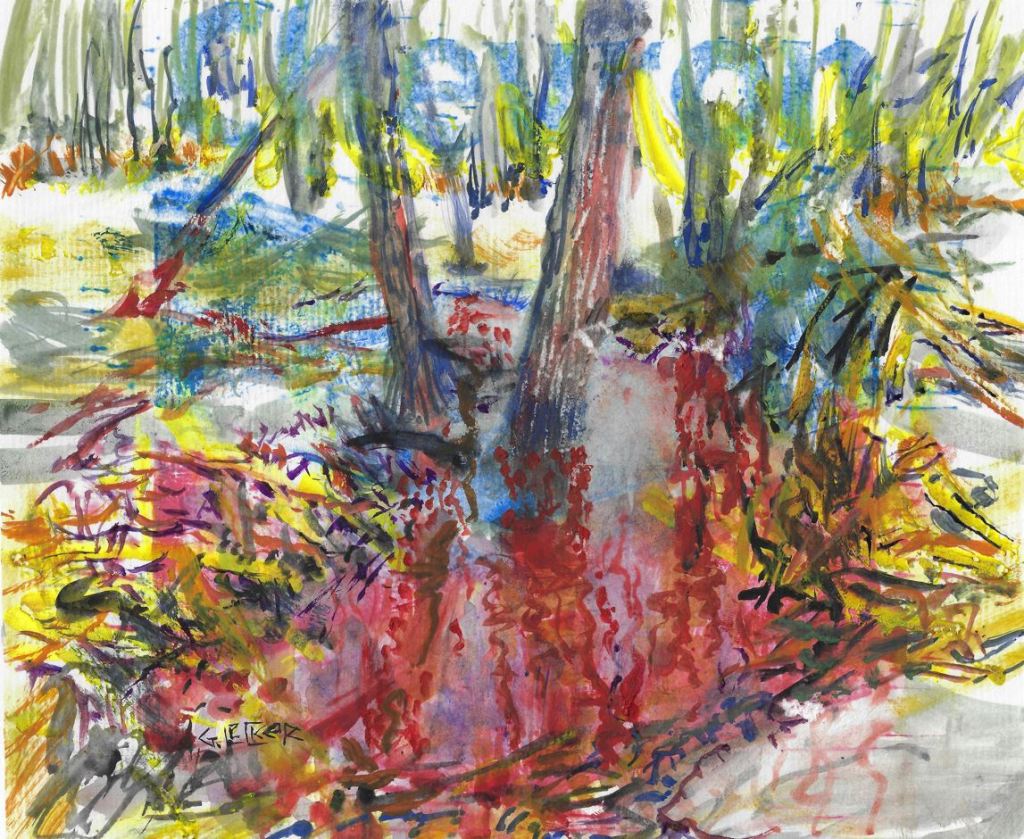
Seeps with oily sheen are evidence of organic substances of unknown origin.
3. Tic-Tac-Toe: Snow Flow

Road salt, sand and other impurities like leaves and vehicle fluids run off streets and parking lots during rainfall and snow melt. Reducing the amount of impervious surfaces would reduce stormwater runoff that leads to erosion and flooding.
4. CSO – Combined Sewer Outflow
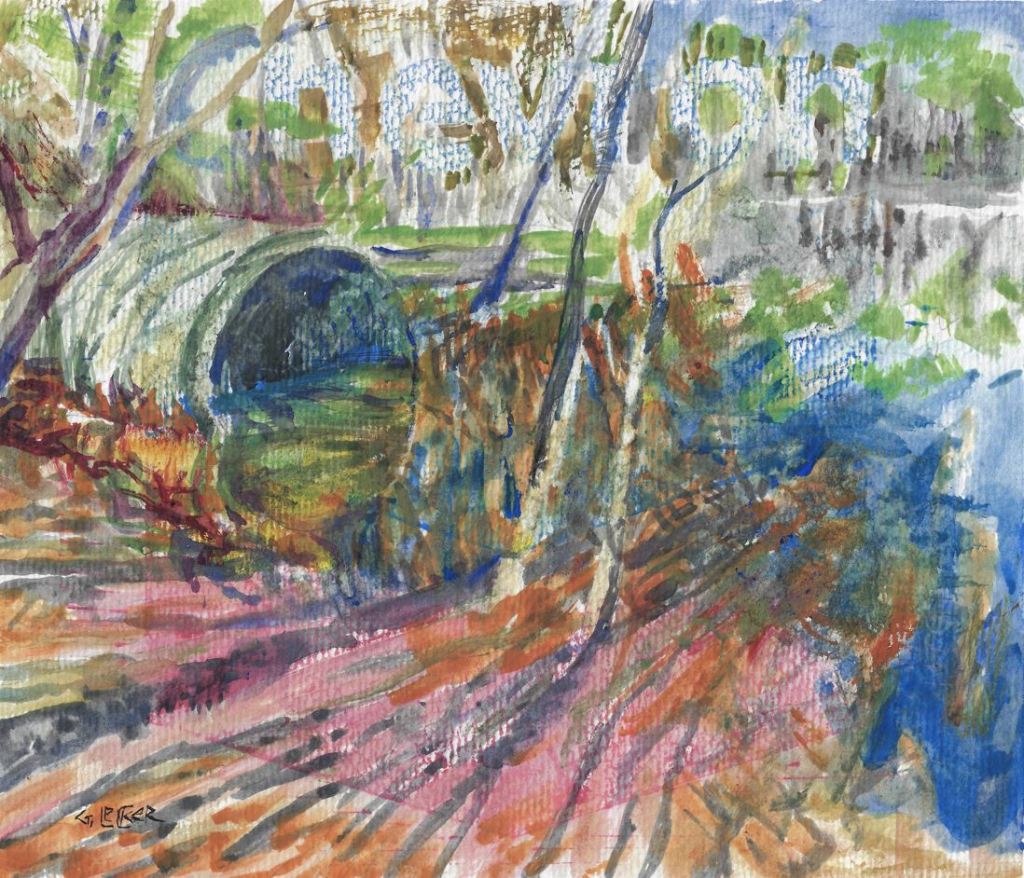
When heavy rainfall overwhelms municipal wastewater facilities, raw sewage is discharged into water bodies (civilizations original sewage system). The City of Minneapolis has been working to eliminate CSO since the 1960s. Minneapolis and St. Paul worked to separate sanitary and storm sewers between 1986 and 1995. Now, the only remaining connections are those deemed most expensive to separate.
5. Waters With Borders
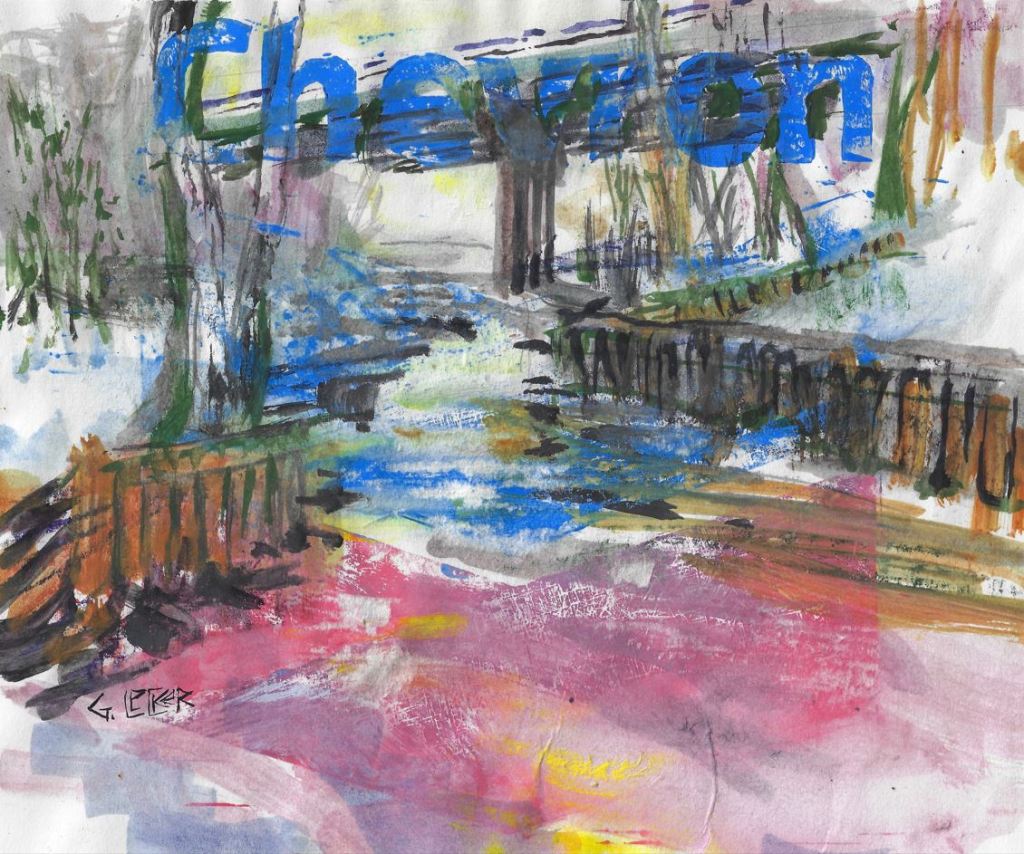
A waterway like Bassett Creek naturally undulates and overflows its banks into a floodplain. Sheet metal piling, stone and concrete retaining walls and bridge abutments constrain Bassett Creek to narrow channels that increase forces on the few natural banks leading to erosion.
Rivers and creeks often naturally form floodplains or oxbows in shallow gradients. Older waterways cut deeper valleys and even gorges. Younger waterways or those with minimal gradient overflow their banks in times of heavy rains. This allows for greater capacity for floodwaters and allows floodwaters to seep into the soil and recharge underground aquifers.
6. Garbage Collection

Each spring on the Saturday nearest to Earth Day (April 22), Minneapolis residents and friends spend a morning collecting trash from parks. In Harrison and Bryn Mawr neighborhoods, we focus our efforts on Bassett Creek. Much refuse blows or flows to the lowest point in the landscape – the creek. There, it is snagged by branches dangling and fallen in the creek. Illegal dumping also contributes to the garbage we find in the creek.
7. If Not For The Railroad
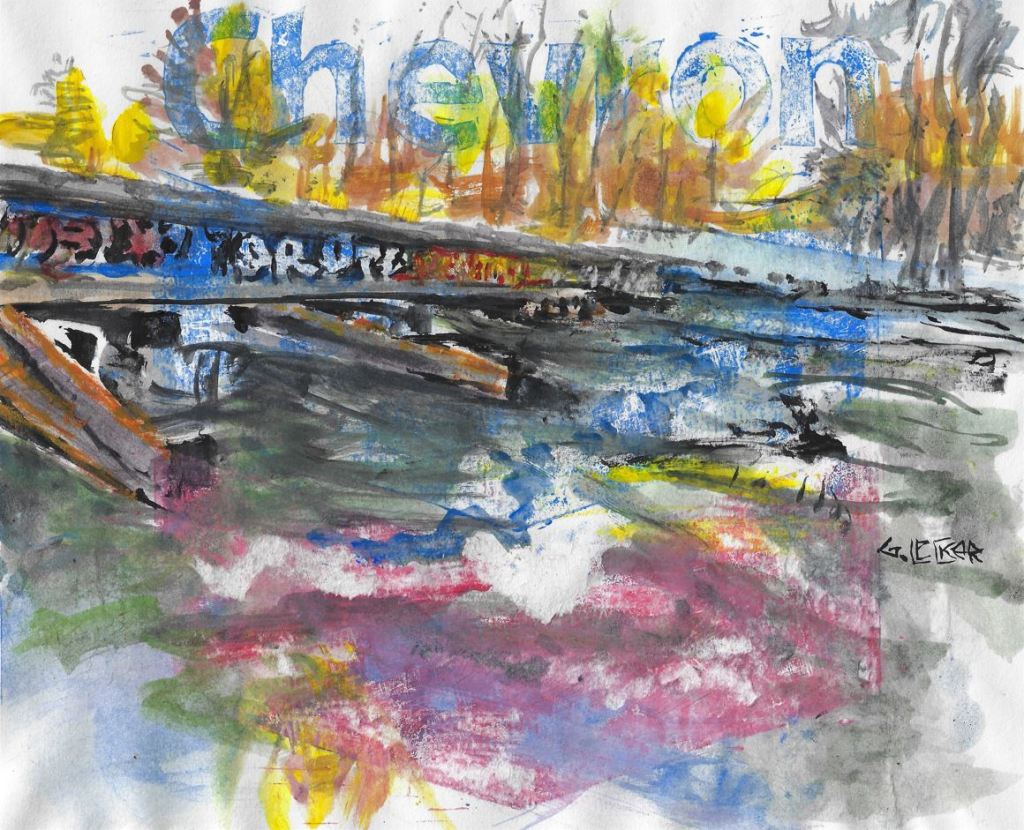
This spur rail line has not been used in some time, as evidenced by the volunteer trees that have grown amidst railroad ties and between the rails themselves. This creek crossing, a connection between woodland paths, would not exist if not for the Railroad.
8. Underwater Travels
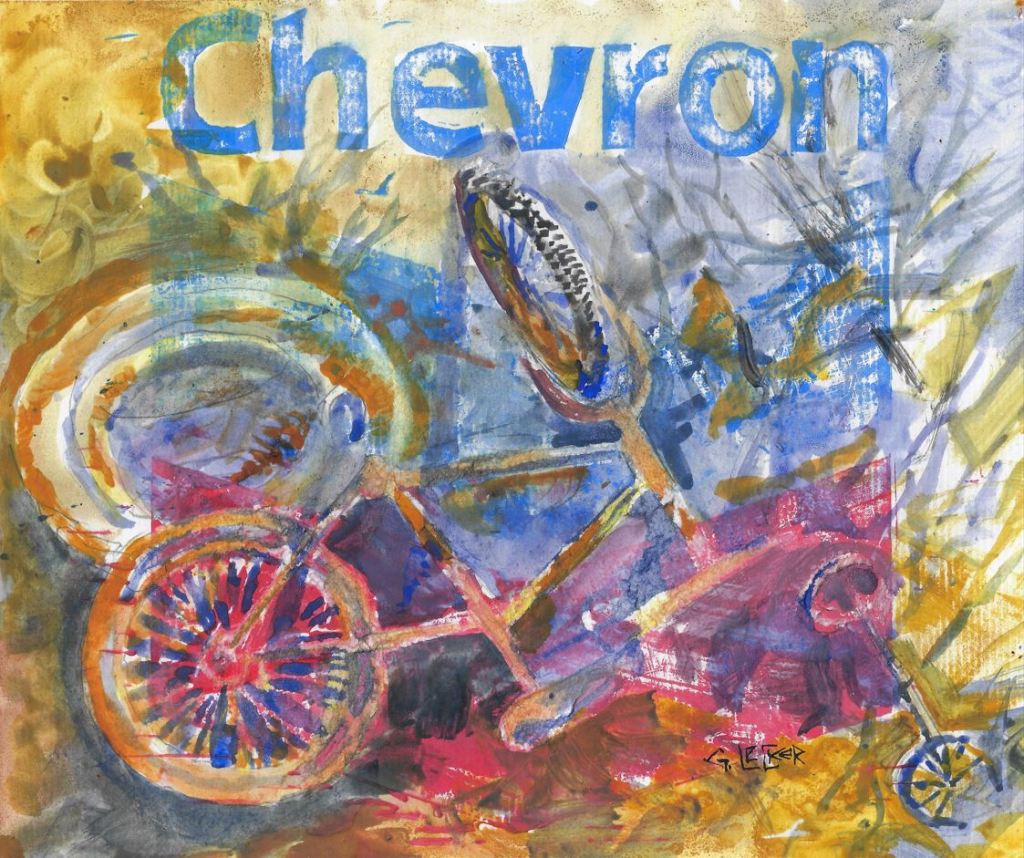
Bicycles and tires are among the largest items discarded in the creek.
9. Forgotten Branch

Faulty engineering design resulted in culverts being installed at an incorrect elevations or slopes. Consequently, the backwaters of the north branch of Bassett Creek have a fraction of the water flow compared with the main branch. What could be floodwater storage is a stagnant pool with algal blooms.
10. Shop Till You Drop – All My Worldly Possessions
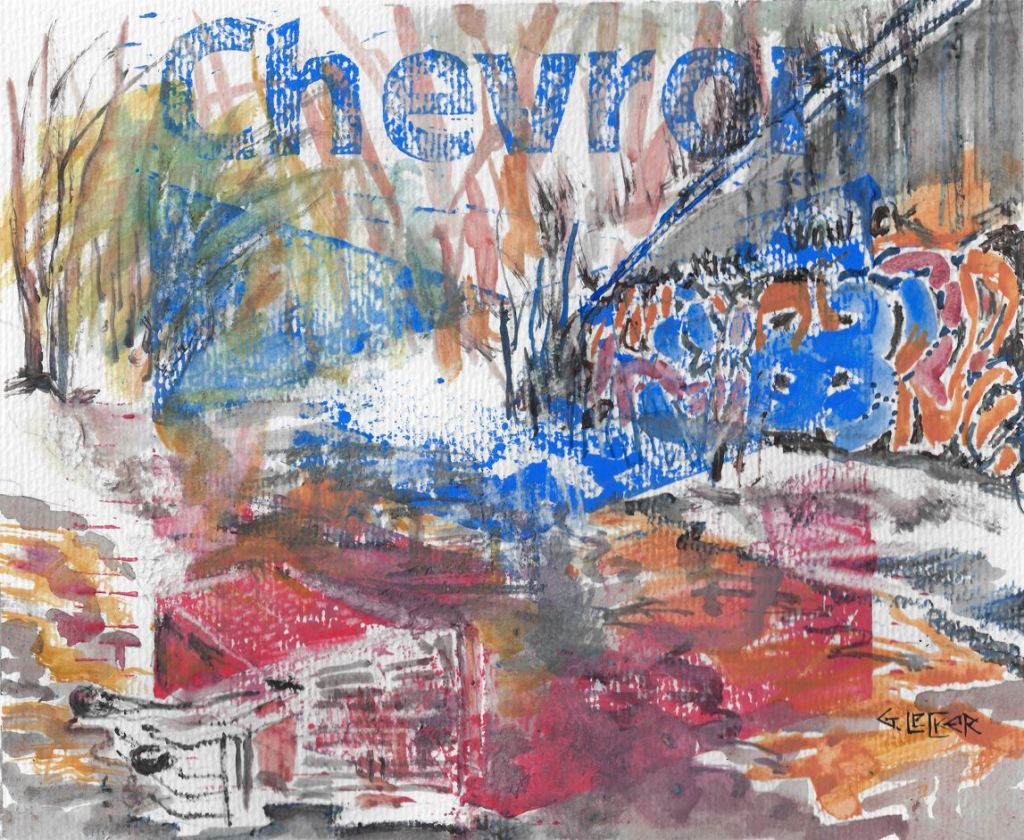
Without a permanent home to store clothes, sleeping bag and food; homeless rely on small wire-framed carts, wheeled luggage or grocery carts to carry everything. A $200 cost to stores, shopping carts are a life raft – allowing a person to hold onto the reminders of a time before they ended up on the streets.
11. Hide and Seek Creek
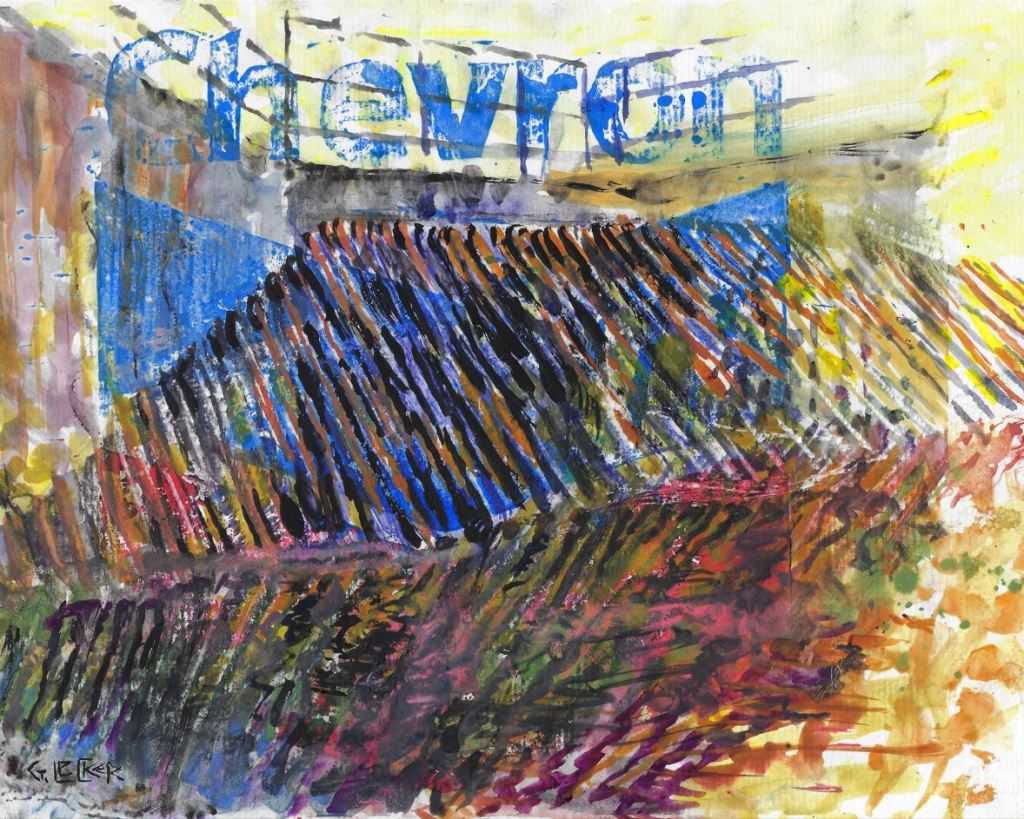
On the western edge of downtown Minneapolis, Bassett Creek enters one of two tunnels that burrow under skyscrapers toward their junction with the Mississippi River. At the largest, a sturdy grating catches brush and trash.
12. Private Profit: Public Pain

The site of the former Precision Plating – designated a Superfund site, is encircled by chain link fencing. Inside, unknown substances are stored in 55-gallon drums. The 55-gallon drum was originally designed for transporting crude oil. It’s a popular shape and size of container because it’s the largest package that can be easily moved by one person, while still being g able to hold a lot. The drum is strong, durable and can be rolled into place or put on a pallet for a forklift.
13. Creekside Mill Ruins
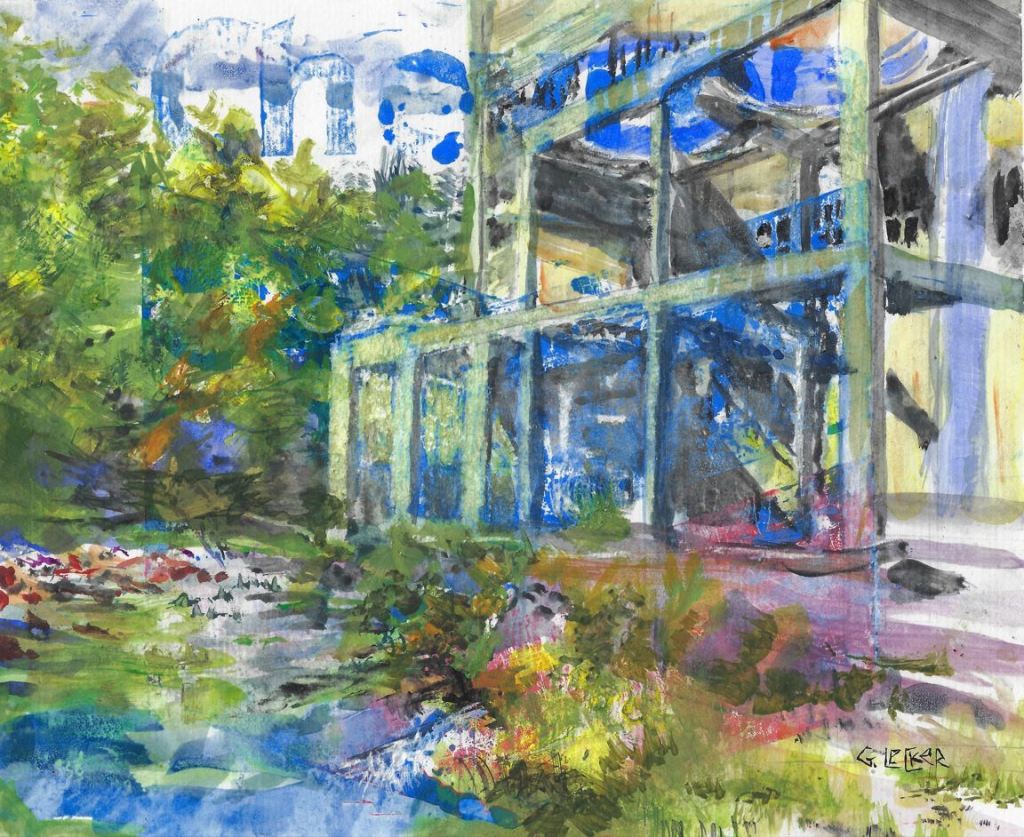
Fruen Mill built in the 1890s, rises next to Bassett Creek near Theodore Wirth Park on the city’s west side. The mill’s owner was one of the first manufacturers of table cereals in Minneapolis. After it was sold to ConAgra in 1971, the mill was closed and fenced off.
Trespassers, self-named urban explorers, have been injured while investigating the six-story concrete building, and at least one person killed while exploring the crumbling mill.
14. Creekside Graffiti Gallery
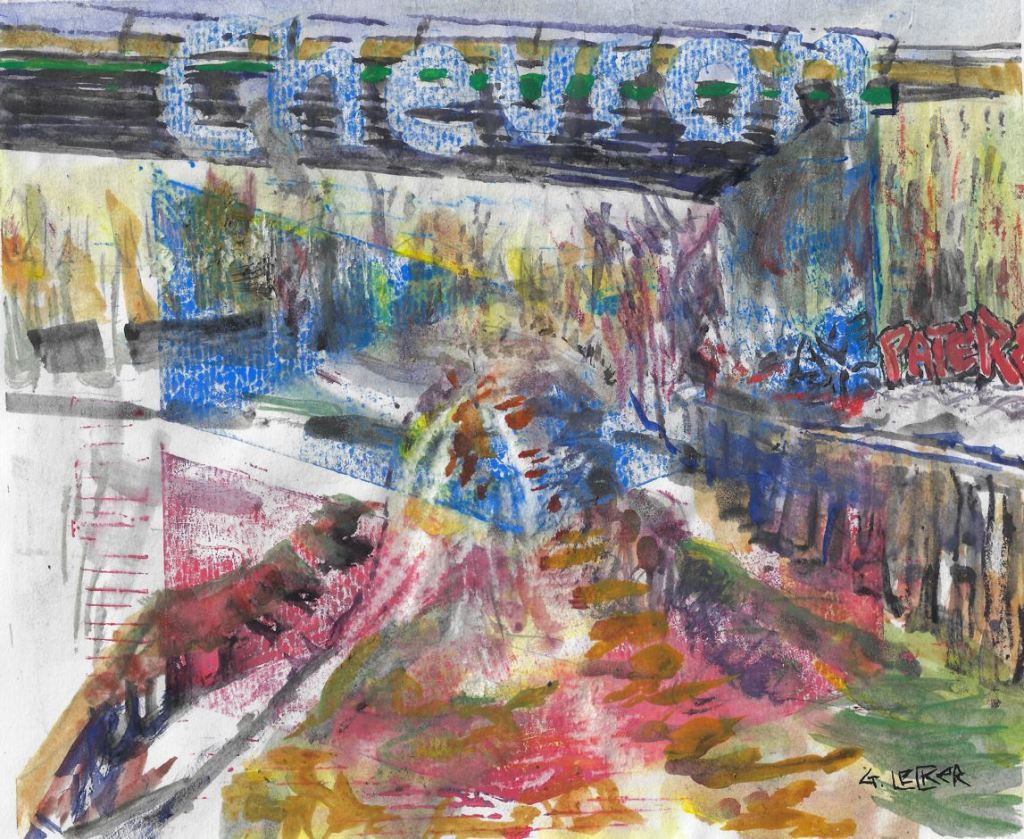
Numerous roadway bridges cross the creek: Glenwood Avenue, Penn Avenue, Cedar Lake Road, and Van White Memorial Parkway. Some of the finest graffiti can be found on the bridge abutments.
15. Urban Underground
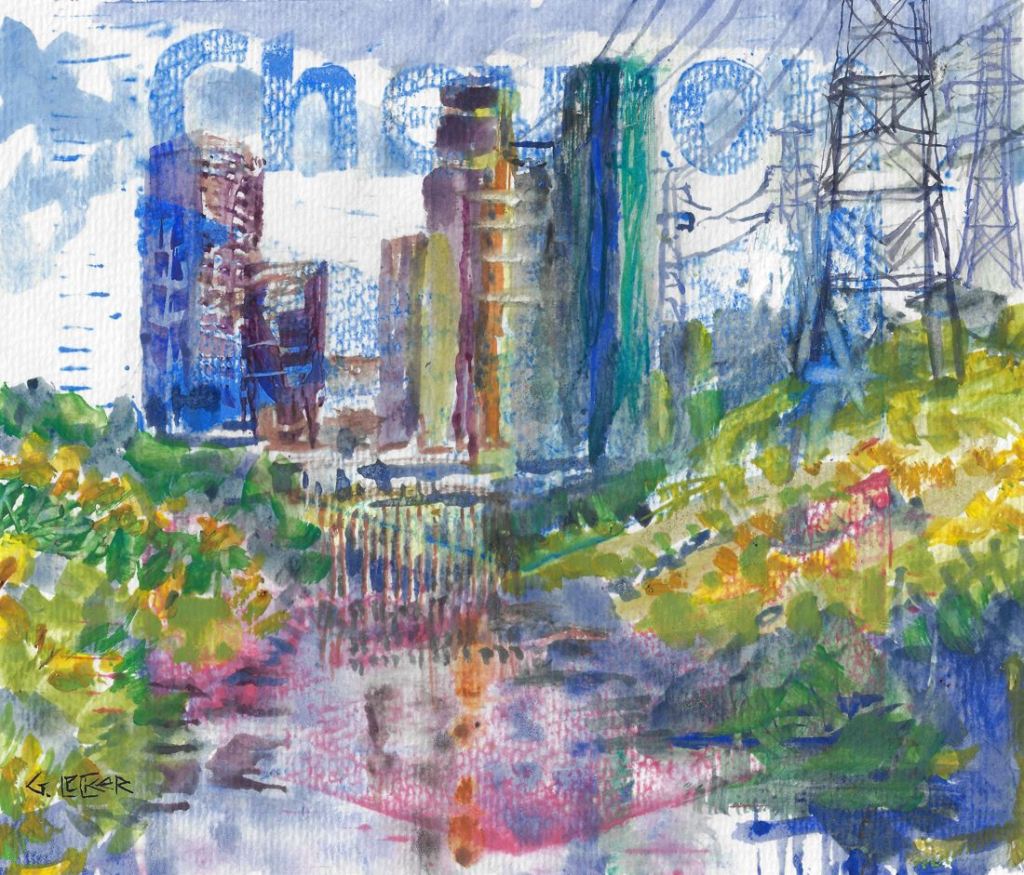
The creek’s path is straightened to follow property lines of industrial property including the Minneapolis vehicle impound lot, just out of view to the right side of the power transmission lines in this view. “Out of sight; out of mind” describes this part of the creek.
16. Tow-Away Zone
 Greg Lecker: Artist - Naturalist